Published on July 7, 2026
10 Years of Poulet du Faso: A Collaborative Model Supporting Broiler Breeding in West Africa
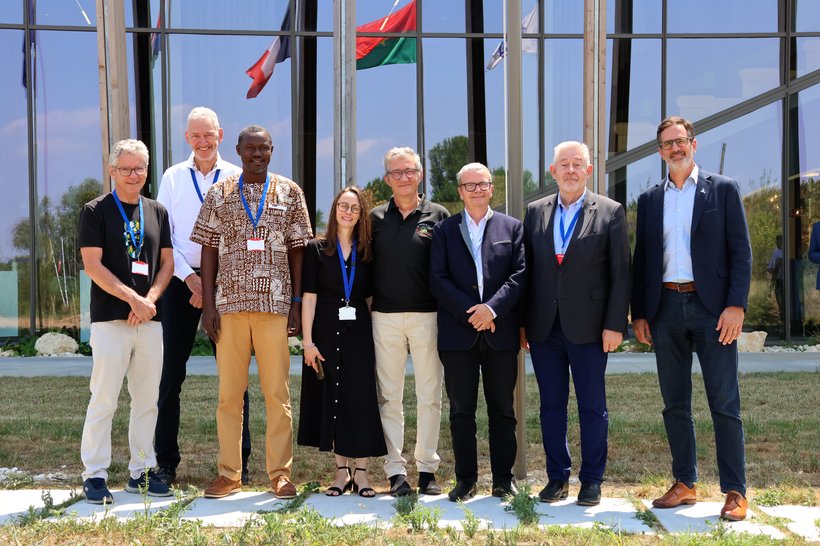
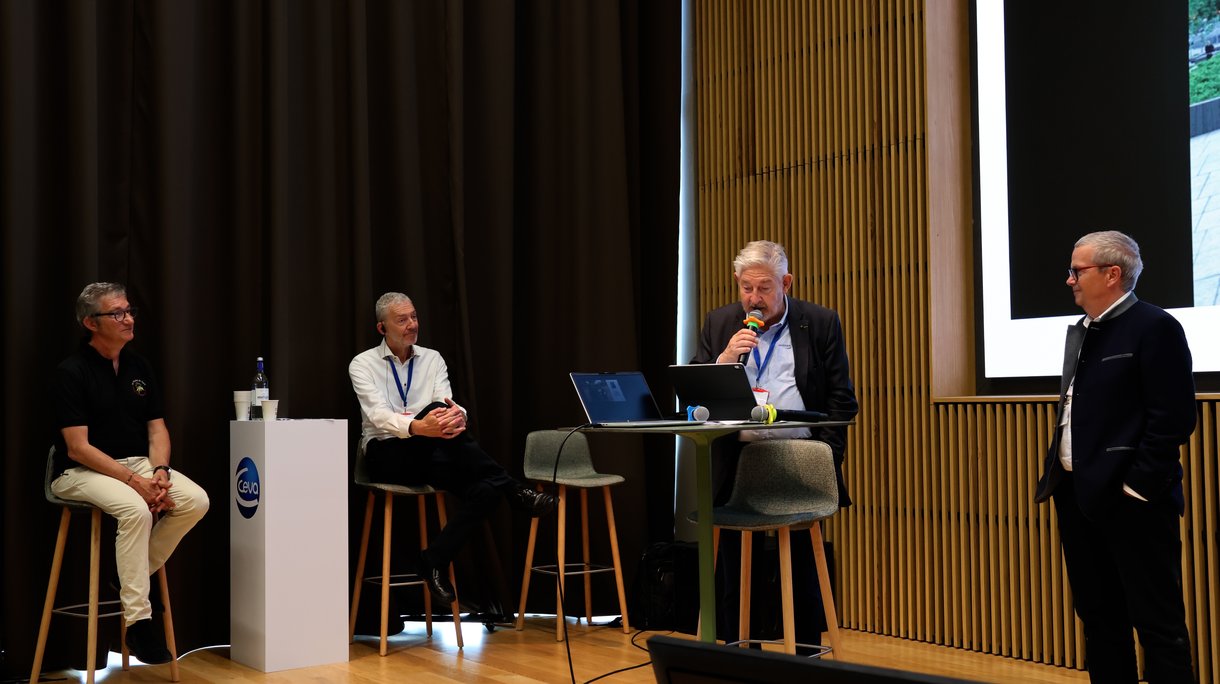
In June 2026, partners from across the poultry sector gathered at Ceva Santé Animale’s headquarters in France to celebrate a major milestone: the 10 years anniversary of Poulet du Faso, an initiative built on collaboration, local entrepreneurship, and a shared ambition to strengthen broiler production in Burkina Faso.
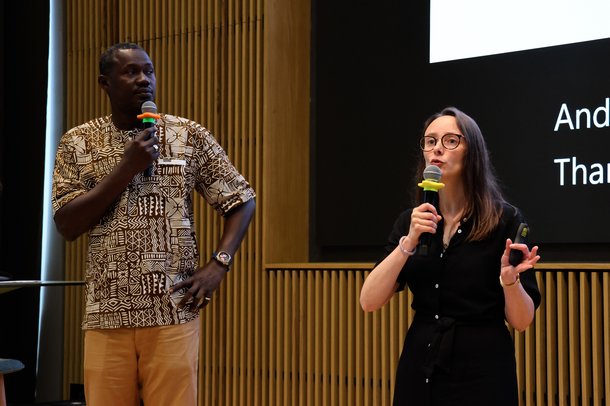
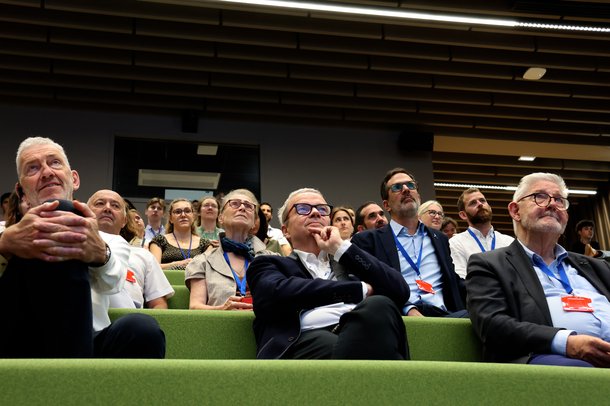
The event brought together around 100 participants on site and 339 online, mainly from Ceva, SASSO, Hendrix Genetics, and partner organizations. More than a celebration, it was an opportunity to highlight the collective achievement behind the project and the long-term impact of a model shaped by strong partnerships between local and international stakeholders.
From a Shared Vision to a Practical Solution
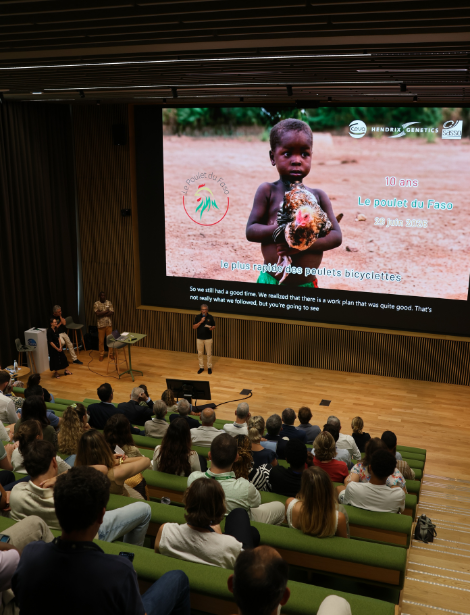
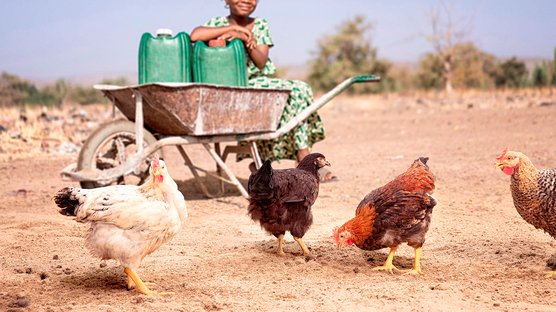
Launched in 2016, the Poulet du Faso initiative began when Ceva Santé Animale received a grant from the Gates Foundation to lead a five-year project supporting Burkina Faso’s broiler sector. At the time, poultry farming in the country was largely based on backyard production, with limited structure, low productivity, and restricted access to animal health services.
Traditional chickens played, and continue to play, a major economic and social role for rural communities. However, production levels were often limited, with local hens producing around 10 chickens per year, significant losses due to limited health protection, and birds taking up to six months to reach a market weight of approximately 1.1 kg.
The founding idea of the project was not to replace existing practices, but to improve and build on them. The ambition was clear: adapt to local farming systems, preserve the qualities appreciated by consumers, and create a sustainable model that could deliver long-term impact for rural communities.
To achieve this, the project focused on improving local chicken genetics, strengthening production performance, supporting vaccination and animal health protection, improving farming systems, and ensuring that the approach would be accepted and adopted by farmers.
Preserving Local Taste While Improving Performance
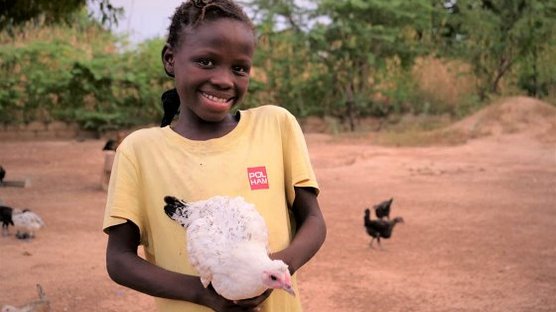
At the heart of the initiative was a pragmatic breeding approach: selected local cockerels, known as Coq du Faso, were crossed with dual-purpose exotic hens from the SASSO SA51 breed. This cross gave rise to the Poulet du Faso, a bird designed to combine the qualities of local poultry with improved productivity and resilience.
The result was a product adapted to local expectations, especially in terms of taste, while offering significant improvements in production. Compared with traditional poultry systems, the Poulet du Faso model allows production to move from around 10 chickens per year per hen to approximately 140, with birds reaching market weight in about three months instead of six.
The model also introduced more structured flock management, hatchery vaccination, and support for small-scale commercial farmers while maintaining the local characteristics valued by consumers.
A Value Chain Built Through Partnership
To make this possible, a coalition of committed professionals and organizations from Burkina Faso, France, and the Netherlands came together. This partnership brought together public and private actors, including Ceva, NTD, and SASSO, the broilers division of Hendrix Genetics, each contributing expertise, technology, field knowledge, and long-term commitment.
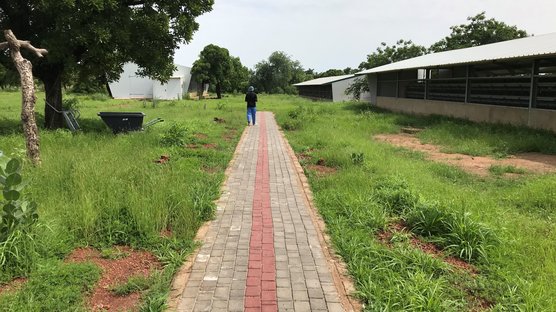
Within five years, the initial vision became a concrete and operational model. The Center of Avian Selection, Coq du Faso Sarl, was created to select local cockerels, while multiplication farms were developed to cross them with SASSO hens and produce Poulet du Faso chicks. A distribution network was also established, combining traditional small-scale commercial channels with a technical-commercial structure. In 2019, this network evolved into a dedicated company: Anipole.
This complete value chain, from selection and production to distribution and on-farm support, has been one of the key reasons behind the project’s success. By combining technical expertise with training, field follow-up, and local entrepreneurship, the initiative has progressively supported the autonomy of the actors involved.
Strong Results and Growing Adoption
Over the past decade, Poulet du Faso has become a recognized model in Burkina Faso’s poultry sector. What started with one or two hatcheries has now expanded to five to seven active hatcheries, with national distribution and continuously increasing production.
The initiative has also contributed to genetic progress in local breeding stock, with improvements observed in egg production and male fertility rates over the past 10 years. Sales of local breeding cockerels reached 73% of the selection center’s production capacity in 2025, compared with 39% in 2020. The objective is to reach 80% in the medium term and 90% in the long term, reflecting both the growing adoption of the model and its remaining potential for development.
Today, Poulet du Faso is increasingly recognized as a regional brand with a strong foothold in traditional poultry markets. Its success demonstrates that rural poultry development can combine local adaptation, economic viability, and measurable impact.
Continuing the Collaboration Through SAPPSA
Since 2019, SASSO and Coq du Faso Sarl have continued their partnership under the Gates Foundation-supported SAPPSA program, which includes two successive projects: Sustainable Access to Poultry Parent Stocks in Africa from 2018 to 2023, and Securing Affordable Poultry Parent Stocks in Africa from 2023 to 2029.
As part of this collaboration, the two organizations conduct recurrent testing to evaluate and improve poultry performance under sub-Saharan rural conditions. Coq du Faso Sarl is responsible for rearing SASSO breeds in Burkina Faso and monitoring performance data, which is then shared with SASSO to support its breeding program and further improve the performance of SASSO breeds in local production environments.
This joint effort has also received recognition at the FAO Global Technical Recognition Ceremony, underlining its contribution to sustainable poultry development and food security across the region.
A Model for Sustainable Poultry Development
A decade after its launch, Poulet du Faso stands as a powerful example of what can be achieved when public and private actors, local entrepreneurs, technical experts, and international partners work toward a shared goal.
By improving access to genetics, technical knowledge, vaccination, and market opportunities, the initiative has helped empower rural farmers while supporting a more structured and resilient poultry value chain. Its business-oriented model places economic sustainability at the center, while keeping impact for rural communities as the driving priority.
For SASSO, the 10-year anniversary of Poulet du Faso is not only a moment to look back on a successful partnership. It is also a reminder of the importance of developing poultry solutions that are adapted to local realities, rooted in collaboration, and designed to create lasting value for the people and communities they serve.